

Many ATM operators believe they have security covered.
Alarms are installed. Cameras record activity. Monitoring vendors send notifications. Network systems track uptime and errors. On paper, everything looks protected.
Yet physical tampering still turns into loss. Downtime stretches longer than expected. Service calls pile up. Costs rise quietly in the background.
The issue is rarely a lack of security tools.
The real problem is the gap between detection and action.
This gap appears when teams know something happened but cannot respond fast enough or choose the wrong response for the situation. Over time, that gap becomes one of the most expensive weaknesses in ATM operations.
Understanding and closing this gap is where modern ATM operations are changing. It is also where HoloTrak helps operators move from reactive security to coordinated, confident response.
Detection Alone Does Not Prevent Loss
Detection answers a simple question: did something change?
Action answers a more important question: what should we do now?
Most traditional security systems focus heavily on detection. They generate alerts. They record events. They provide evidence after the fact. Those functions matter, but they do not reduce downtime or service costs on their own.
Operators feel the pain when detection does not translate into timely action. Alerts arrive late. Ownership is unclear. Teams hesitate while they gather context. By the time a decision is made, the damage is already done.
This is why “good enough” security often fails. It detects events but does not guide the next step.
Effective ATM operations require more than awareness. They require clear response paths based on the type of event that occurs.
Two Types of Events. Two Very Different Response Paths.
Not all ATM incidents are the same. Treating them as such creates unnecessary risk and unnecessary cost.
Successful operators separate incidents into two distinct categories:
- Physical security events
- Operational and network related issues
Each category demands a different response. HoloTrak helps operators make this distinction clearly and consistently across their operations.
Response Path One: Physical Security Events Require Immediate Awareness and Escalation
Physical security events involve real risk. These events include forced access attempts, movement or tilt of the machine, removal attempts, and JackPotting scenarios.
In these moments, the goal is not restoration. The goal is protection.
Operators need immediate awareness when something physical changes so they can respond with speed and confidence. Seconds matter. Minutes matter even more.
HoloTrak’s HoloGuard solution focuses on this exact challenge. Sensors detect movement, tilt, and forced access in real time. Audible alarms deter further action. Alerts reach the right people without delay.
This approach helps operators reduce exposure time, coordinate response faster, and limit loss. It also provides clear signals that distinguish true physical threats from routine operational noise.
In physical tampering scenarios, remote intervention such as power cycling is usually not appropriate. The risk is active. The priority remains awareness, deterrence, and escalation.
This clarity is critical. Operators who respond correctly to physical events protect assets and avoid compounding risk.
Response Path Two: Operational Downtime Requires Fast Restoration, Not Escalation
Many costly ATM incidents have nothing to do with theft or tampering.
Machines go offline due to network interruptions. Software hangs occur. Peripheral devices stop communicating. Monitoring systems flag anomalies that leave the ATM unavailable.
In these cases, there is no physical threat. Yet the default response often remains the same: dispatch a technician.
This default creates unnecessary expense.
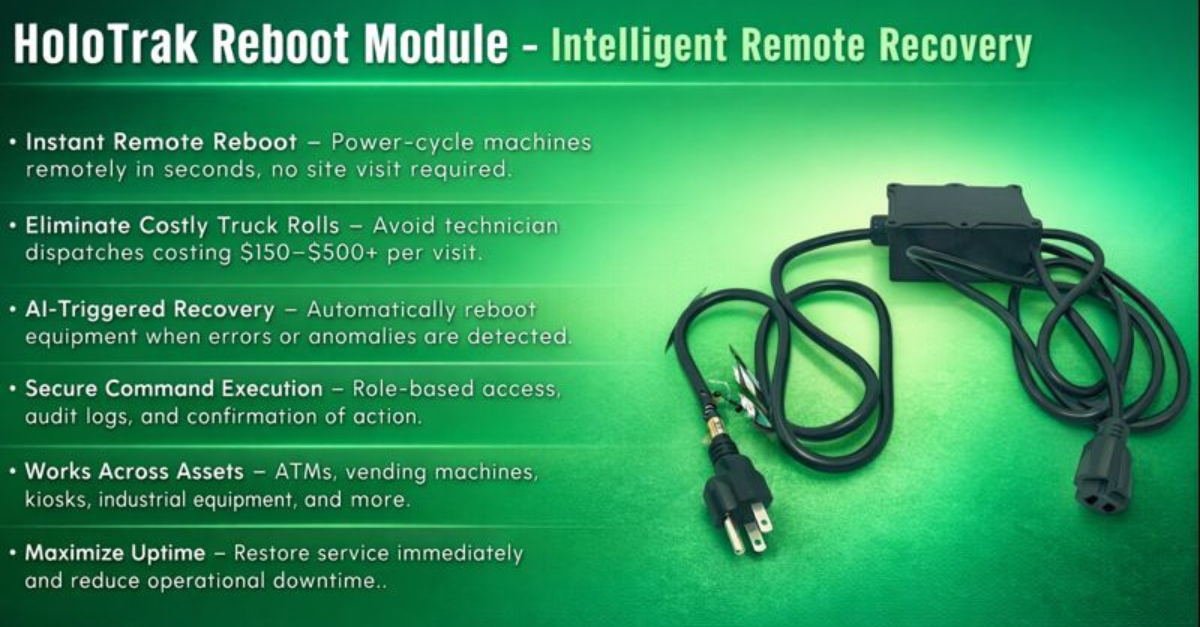
HoloTrak addresses this challenge by pairing HoloGuard’s awareness with a remote power reboot module that supports operational recovery during non physical issues. When operators already know an ATM is offline or unstable, a controlled remote reboot can often restore service in minutes.
This capability helps operators:
- Reduce unnecessary truck rolls
- Restore uptime faster
- Lower service costs
- Keep machines available for customers
This response path is about efficiency, not security. It gives operations teams a smarter first step before escalating to a site visit.
Why Blurred Response Paths Create Expensive Outcomes
Problems arise when physical security events and operational issues get treated the same way.
If every alert leads to escalation, teams overreact and incur avoidable costs. If every outage triggers a truck roll, service budgets suffer. If teams lack clarity, decision making slows.
Operators need confidence that they are choosing the right response every time.
HoloTrak helps create that confidence by clearly separating physical security response from operational recovery. This separation reduces confusion, shortens response times, and prevents costly overreaction.
A Physical Security Event in the Middle of the Night
An ATM experiences a sudden tilt late at night.
HoloGuard sensors detect the movement instantly. An audible alarm activates. Alerts reach the operations team in real time. The event is escalated quickly and the machine is secured.
The key outcome is reduced exposure time.
This scenario highlights why detection paired with immediate escalation matters. The response matches the risk. Loss is minimized because action happens at the right moment.
When an ATM Suddenly Drops Offline
An ATM goes offline overnight due to a network hiccup.
There is no movement. No forced access. No physical disturbance.
The monitoring system flags the outage. Instead of dispatching a technician immediately, the operations team uses the remote power reboot module. The ATM comes back online within minutes.
No truck roll occurs. Downtime stays minimal. Service costs are avoided.
This outcome reflects the power of choosing the right response for the right situation.
The Real Cost of the Detection to Action Gap
Most operators do not lose money because they lack data. They lose money because action happens too late or in the wrong way.
The gap between detection and action drives:
- Extended downtime
- Increased service calls
- Higher operational distraction
- Rising costs that rarely appear on a single report
Closing this gap requires more than adding tools. It requires clarity, coordination, and control.
Why Industry Leaders Treat Response as an Operational Discipline
Leading ATM operators no longer treat security as a standalone function. They treat response as an operational discipline.
They understand that protecting machines and keeping them online are connected challenges that require different actions at different times.
HoloTrak helps operators make this shift. By combining real time physical awareness with smart operational recovery, HoloTrak enables teams to act decisively instead of react blindly.
This approach supports lean teams, reduces friction, and scales without adding complexity. It also aligns security, operations, and cost control into a single, coherent response strategy.
Moving Beyond “Good Enough” Security
“Good enough” security tells you what happened.
Industry leading operations decide what happens next.
ATM operators who clearly separate physical security response from operational recovery gain control over incidents instead of letting incidents control them. They reduce downtime, limit unnecessary dispatches, and protect assets with confidence.
HoloTrak helps operators close the gap between detection and action by strengthening how teams respond in the moments that matter most, without requiring them to replace existing systems.
For operators ready to move beyond reactive security and toward coordinated response, this is where real progress begins. Contact HoloTrak to explore how this approach can support your operation.