

Most organizations believe they are doing the responsible thing when problems are discovered, investigated, documented, and resolved. Reports are generated. Root causes are discussed. Lessons learned are shared.
Yet the damage has already occurred.
Assets are lost. Shipments are compromised. Equipment sits idle. Customers are frustrated. Teams spend hours explaining what happened instead of preventing it from happening again.
Late information feels professional. Until you realize it is quietly becoming your most expensive habit.
Why Late Discovery Has Become Normal
Late discovery is rarely the result of negligence. In most cases, it is the outcome of systems that were never designed for prevention.
Many monitoring tools were built for recordkeeping. They exist to prove what happened, not to stop it from happening. Data is collected periodically. Alerts are triggered after thresholds are crossed. Reports are reviewed when someone has time.
This approach has become normalized across industries because it feels controlled and defensible. There is documentation. There is history. There is evidence.
What is missing is time.
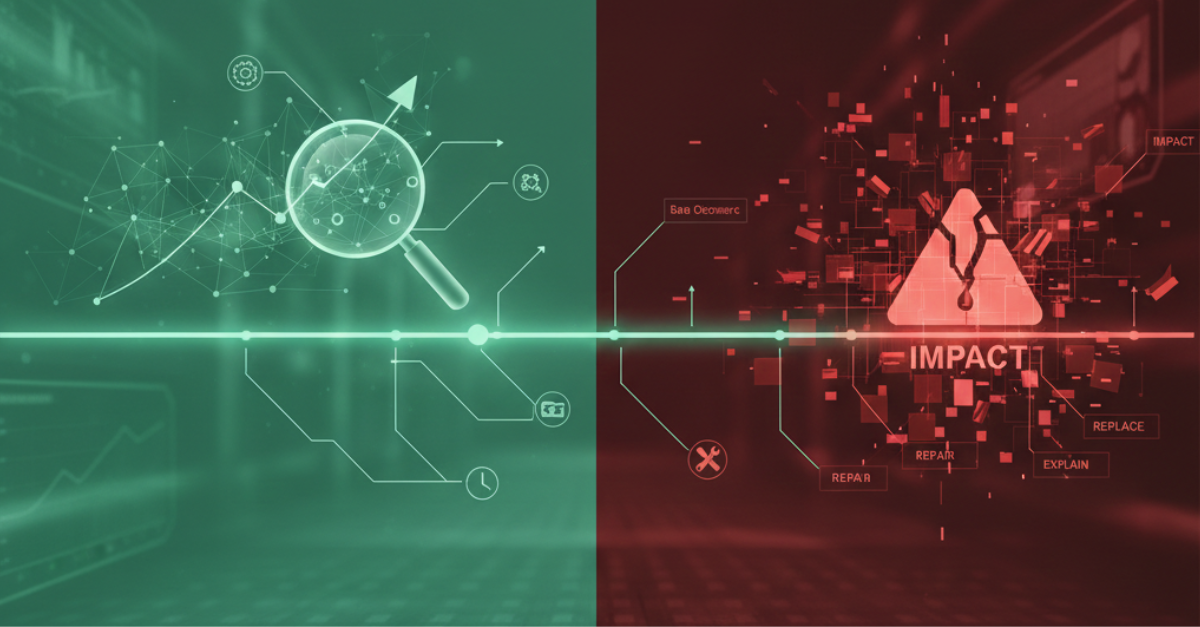
When organizations only learn about problems after the impact has already occurred, options disappear. Decisions become binary. Investigate or write off. Repair or replace. Explain or escalate.
Late discovery limits choice.
The Real Cost of Finding Out After the Fact
The most obvious costs of late discovery are easy to calculate. Replacement costs. Downtime. Insurance claims. Missed service commitments.
The hidden costs are far more damaging.
Teams spend hours investigating issues that could have been prevented. Leaders lose confidence in their ability to anticipate risk. Customers begin to expect disruptions. The same issues repeat under different labels, often dismissed as one off incidents.
When late discovery becomes the norm, organizations shift from preventing problems to managing consequences.
That shift quietly drains time, trust, and momentum.
Risk Rarely Appears All at Once
One of the biggest misconceptions in operations and asset management is that problems arrive suddenly.
They almost never do.
Risk accumulates gradually through small changes that seem insignificant on their own. Movement when something should be stationary. Environmental changes that precede failure. Handling patterns that slowly degrade performance. Repeated deviations that are never connected.
These early signals exist across industries. They show up in logistics, infrastructure, field operations, finance, utilities, events, and any environment where assets move, sit unattended, or change hands.
The issue is not a lack of signals. It is a lack of attention to them.
Why Alerts Alone Do Not Prevent Loss
Many organizations attempt to solve late discovery by adding alerts. Unfortunately, alerts without context or ownership often create more problems than they solve.
Alerts that fire constantly become noise. Alerts without clear responsibility get ignored. Alerts without defined actions create confusion.
Over time, teams respond by tuning alerts down or turning them off entirely. The system technically works, but behavior does not change.
An alert that does not lead to action is not awareness. It is clutter.
The Gap Between Knowing and Deciding
Even when teams receive timely information, another challenge appears. Knowing something happened is not the same as knowing what to do next.
Data often answers what occurred but fails to guide action. Decisions rely on tribal knowledge. Severity is debated. Responsibility is unclear. Critical minutes pass while teams align.
By the time a decision is made, the opportunity to intervene has already closed.
Speed matters, but clarity matters more.
Prevention Is a Timing Problem
Prevention is often framed as better response. Faster dispatch. Quicker escalation. More efficient recovery.
In reality, prevention is a timing problem.
The earlier an organization becomes aware of risk, the more options it has. Early awareness allows for intervention, adjustment, and choice. Late awareness forces reaction.
Early awareness creates flexibility. Late awareness removes it.
The difference between the two is not technology. It is design.
Moving From Events to Patterns
Organizations that consistently prevent loss think differently about data. They do not focus on isolated incidents. They look for patterns.
Patterns reveal systemic risk. Repeated behaviors. High risk routes. Environmental conditions that correlate with disruption. Handling trends that quietly increase exposure.
When teams stop treating incidents as random and start viewing them as signals, prevention becomes possible.
Patterns tell a story long before damage occurs.
Designing Systems Around Decisions
The most effective monitoring and risk systems are not designed around data collection. They are designed around decisions.
The process starts with a simple question. What decisions need to be made before impact occurs?
From there, systems can be designed backward. Identify the signals required to support those decisions. Define ownership clearly. Establish actions that can be taken when risk appears.
Monitoring becomes a support layer. Not the objective.
When systems are built around decisions, information arrives with purpose. Teams know what matters. Accountability is clear. Action becomes natural.
What Changes When Teams Learn Sooner
When organizations shift from late discovery to early awareness, the impact extends far beyond loss prevention.
Surprises decrease. Investigations become rare. Escalations feel manageable. Confidence increases across operations, risk, and leadership.
Teams spend less time reacting and more time improving. Decisions become proactive instead of defensive. Planning replaces scrambling.
Knowing sooner changes how organizations operate.
The Role of a True Development Partner
Technology alone does not solve late discovery. Sensors, platforms, and dashboards are only tools.
What makes the difference is how those tools are applied.
This is where the role of a creative development partner becomes critical.
A true partner does not start with hardware or features. They start with questions. Where does risk actually emerge? When does awareness arrive today? Who owns action? What decisions matter most?
From there, systems can be designed intentionally. Signals are aligned to outcomes. Monitoring supports decision making instead of overwhelming it.
At HoloTrak, this philosophy shapes everything we do. We work with organizations to design awareness, not just deploy technology. Our focus is on helping teams learn sooner, act smarter, and prevent issues before they become expensive problems.
The Most Expensive Problems Are the Ones You Never Had to Solve
Late discovery feels acceptable because it is familiar. It feels controlled because it produces documentation. It feels responsible because it explains the past.
But the organizations that stay ahead are not the ones that react best. They are the ones that learn earlier.
The most expensive problems are not the ones that happen.
They are the ones that could have been prevented.
If you are rethinking how and when your organization learns about risk, HoloTrak would welcome the conversation. We partner with teams to design systems that turn early signals into confident decisions and lasting resilience.
Contact HoloTrak to explore how earlier awareness can change what is possible for your organization.