
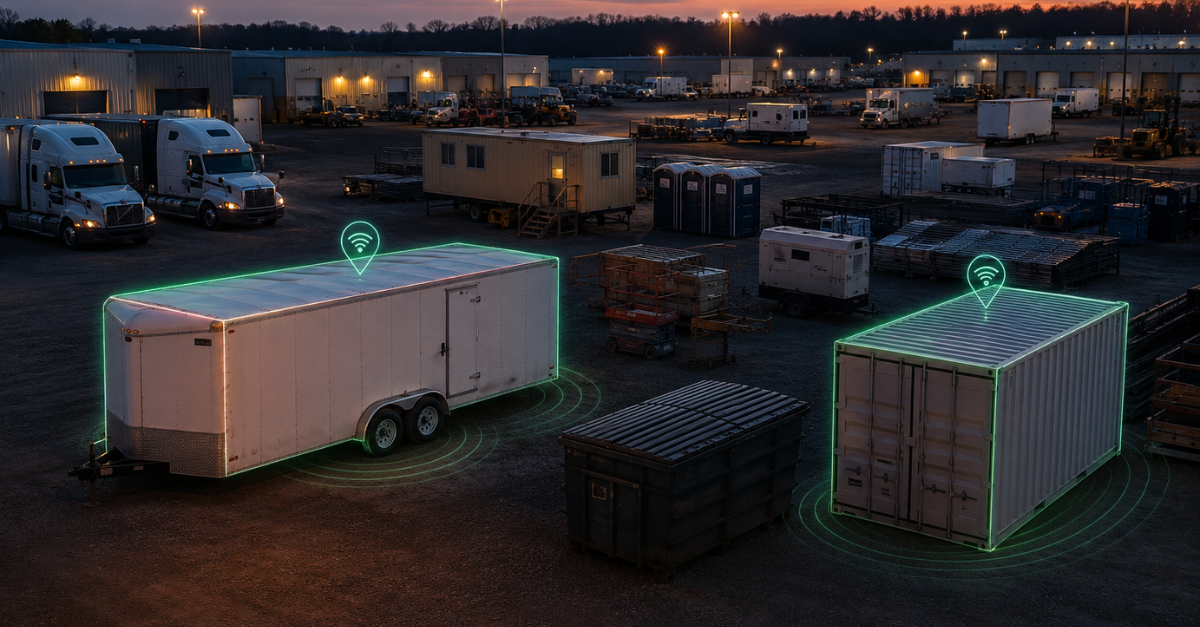
Most businesses today can quickly tell you where their trucks are.
Far fewer can confidently tell you where their trailers, containers, dumpsters, mobile offices, generators, storage units, ATMs, rental equipment, or temporary infrastructure assets are located right now.
That gap is growing larger every year.
As businesses become more mobile and operations become increasingly decentralized, non-powered asset tracking is emerging as one of the most important visibility challenges in modern operations. Companies have invested heavily in vehicle telematics, route optimization, and fleet intelligence, yet many of the assets supporting those operations still operate with little to no real-time visibility.
For many organizations, the problem is not simply theft. The bigger issue is delayed awareness, operational inefficiency, and the inability to make faster decisions when situations change unexpectedly.
The companies that solve this visibility gap are quietly gaining a major operational advantage.
Modern Operations Are More Mobile Than Ever
Today’s business environment looks very different than it did even ten years ago.
Assets constantly move between jobsites, customer locations, temporary yards, event sites, warehouses, contractors, and remote facilities. Businesses are expected to respond faster, operate leaner, and maintain tighter schedules while managing more moving parts than ever before.
This shift has created a growing dependency on non-powered assets.
Construction companies rely on trailers, storage containers, and portable equipment. Waste management companies depend on dumpsters and compactors spread across multiple locations. Financial institutions and ATM operators deploy valuable infrastructure throughout cities and remote sites. Rental companies move assets between customers daily. Mobile clinics, event operators, and service providers all depend on equipment that may never connect directly to a power source.
Yet despite the growing importance of these assets, many organizations still manage them using spreadsheets, phone calls, handwritten notes, or assumptions.
That creates a dangerous operational blind spot.
Traditional Visibility Systems Were Built Around Vehicles
For years, the telematics industry focused heavily on powered vehicles.
Trucks became connected. Fleets became digitized. Dispatch systems improved. Route optimization evolved rapidly.
Meanwhile, many non-powered assets remained largely invisible.
This created a disconnect inside modern operations. A company may have full visibility into where its service trucks are located while having very little awareness surrounding the trailers, generators, storage units, or support equipment those trucks depend on.
In many cases, organizations simply assume someone knows where an asset is located.
Unfortunately, that assumption often breaks down when operations become busy, spread across multiple locations, or experience staffing changes.
The result can include:
- Delayed job starts
- Lost or misplaced equipment
- Unauthorized movement
- Idle assets sitting unused
- Increased replacement costs
- Poor accountability
- Theft discovered hours or days later
Many organizations unknowingly purchase additional equipment simply because they cannot efficiently locate or redeploy the assets they already own.
That is not a tracking problem alone. It is a visibility problem.

The Visibility Gap Impacts More Than Security
When businesses think about non-powered asset tracking, the conversation often starts with theft prevention.
While security matters, the operational impact extends much further.
Poor visibility quietly affects scheduling, productivity, utilization, customer service, and decision-making across the organization.
Field teams may waste valuable time searching for equipment. Dispatchers may struggle to verify whether assets are available or already deployed elsewhere. Managers may have difficulty understanding how assets are being used across multiple locations.
Over time, those small inefficiencies compound into larger operational problems.
Customer experience can also suffer. Missed deliveries, delayed pickups, and inaccurate status updates create frustration for customers who increasingly expect faster communication and real-time responsiveness.
The financial impact becomes difficult to ignore.
Replacement costs rise. Downtime increases. Utilization suffers. Accountability weakens.
The organization slowly becomes more reactive instead of proactive.
Delayed Awareness Is Often the Real Problem
One of the biggest operational risks involving non-powered assets is not the incident itself.
It is the delay between the incident and awareness.
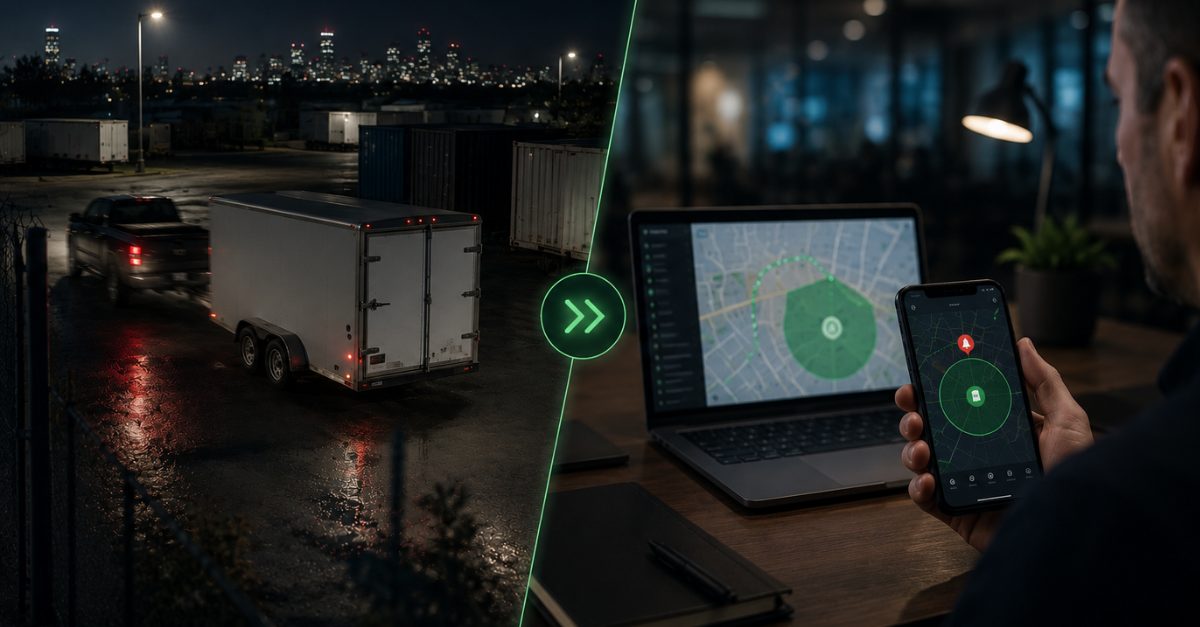
Many businesses do not immediately realize when something has been moved, tampered with, opened, or relocated. By the time someone notices a problem, valuable time has already been lost.
A trailer may disappear overnight. A storage container may be accessed unexpectedly after hours. A generator may be relocated without authorization. A mobile office may experience tampering during a weekend.
Without real-time awareness, the response window shrinks rapidly.
This is why non-powered asset tracking is evolving beyond simple location monitoring.
Businesses increasingly need immediate visibility into activity surrounding their assets, not just where those assets were last seen.
Time-to-awareness has become one of the most valuable operational advantages modern organizations can improve.
The faster teams know something changed, the faster they can respond.
Modern Non-Powered Asset Tracking Requires More Than GPS Alone
Location data remains important, but location alone no longer tells the full story.
Modern operations increasingly require contextual intelligence.
Businesses want to understand:
- When an asset moves
- If a door opens unexpectedly
- Whether an asset tilts, shakes, or experiences impact
- If equipment leaves an approved area
- Whether environmental conditions become unsafe
- How frequently assets are actually being utilized
This is where modern non-powered asset tracking solutions create far greater value than traditional tracking alone.
Movement alerts, geofencing, tilt detection, environmental monitoring, and real-time notifications help organizations understand what is happening around their assets before operational problems escalate.
The future of asset visibility is not simply about seeing dots on a map.
It is about understanding behavior, activity, and operational conditions in real time.
Non-Powered Assets Are Becoming Strategic Operational Data Points
For many organizations, non-powered assets are no longer passive equipment sitting in the background.
They directly influence uptime, scheduling, revenue generation, operational continuity, and customer satisfaction.
A delayed trailer can impact an entire project timeline. A missing generator can create service interruptions. An inaccessible storage container can delay crews for hours. A compromised ATM or mobile unit can create immediate operational disruption.
As businesses continue expanding mobile operations, these assets become increasingly strategic.
Organizations that gain better visibility into their non-powered assets often discover opportunities to improve:
- Asset utilization
- Deployment planning
- Resource allocation
- Operational responsiveness
- Customer communication
- Accountability across teams
Connected assets create better operational awareness.
Better awareness creates better decisions.
Businesses That Solve This Visibility Gap Gain a Competitive Advantage
The organizations that address this challenge early are positioning themselves differently than competitors who still rely on outdated processes and reactive visibility.
Real-time non-powered asset tracking helps organizations operate with:
- Faster response times
- Improved efficiency
- Better utilization
- Reduced downtime
- Greater operational confidence
- Fewer surprises
In many industries, the difference between operational success and operational disruption often comes down to visibility.
The businesses that know more, faster, are usually the businesses that respond better.
Closing the Visibility Gap Starts with Awareness
The visibility gap surrounding non-powered assets is growing quietly inside many organizations.
While fleets have become increasingly connected, many of the assets supporting those operations still operate without real-time awareness, activity monitoring, or intelligent visibility.
That gap creates operational risk.
It also creates opportunity.
Organizations that improve non-powered asset tracking are not simply investing in GPS technology. They are investing in operational awareness, faster decision-making, improved accountability, and stronger control across their business.
As operations continue becoming more mobile, connected visibility will become increasingly important for businesses that want to stay competitive, responsive, and prepared.
HoloTrak helps organizations gain real-time visibility into the assets that often matter most. From trailers and storage containers to mobile infrastructure, rental equipment, and valuable field assets, HoloTrak solutions help businesses improve awareness before operational issues escalate.